Litewski Square
If there’s one place in Lublin you simply cannot skip, it’s Litewski Square — or Plac Litewski in Polish. Whether you’re a first-time visitor or a returning traveller who thinks they’ve already “done” the city, this sprawling, stately square has a way of pulling you back in. It’s the kind of place where locals sip coffee on a bench, tourists pause for photographs, and history hums quietly beneath every cobblestone. Think of it as Lublin’s grand living room — and you’re very much invited.
A Square With a Story 500 Years in the Making
Not many public spaces can claim a history stretching back to the 16th century, but Litewski Square wears its age exceptionally well. Covering an area of about 35,000 square metres, the square was originally created in the 1820s to hold military parades, and was initially known simply as the “Drill Square.”
But the land’s story goes back much further. In 1569, King Sigismund Augustus received feudal homage from Prussian Duke Albert Frederick on what is today Litewski Square. More famously, historical accounts suggest that Lithuanian envoys camped here for the Sejm sessions, which culminated in the signing of the Polish-Lithuanian Union in 1569 — one of the most consequential political events in Central European history. Two nations becoming one, right here on this ground.
The square received its current name in 1925 during the Second Polish Republic, commemorating the historic union between Poland and Lithuania. By then, it had already evolved far beyond its military origins into the civic and ceremonial centrepiece of the city.
📜 Did you know? The name “Litewski” (Lithuanian) had actually been in informal use since at least 1839, when it appeared in print in a guidebook by Seweryn Sierpiński titled Obraz miasta Lublina — making this one of Poland’s earliest documented tourist-friendly square names!
Monuments That Tell Poland’s Turbulent History
One of the most rewarding things to do at Litewski Square is simply wander slowly and read the landscape of monuments. Each one is a chapter in a much larger story — and together, they form an open-air museum unlike anything you’ll find behind glass.
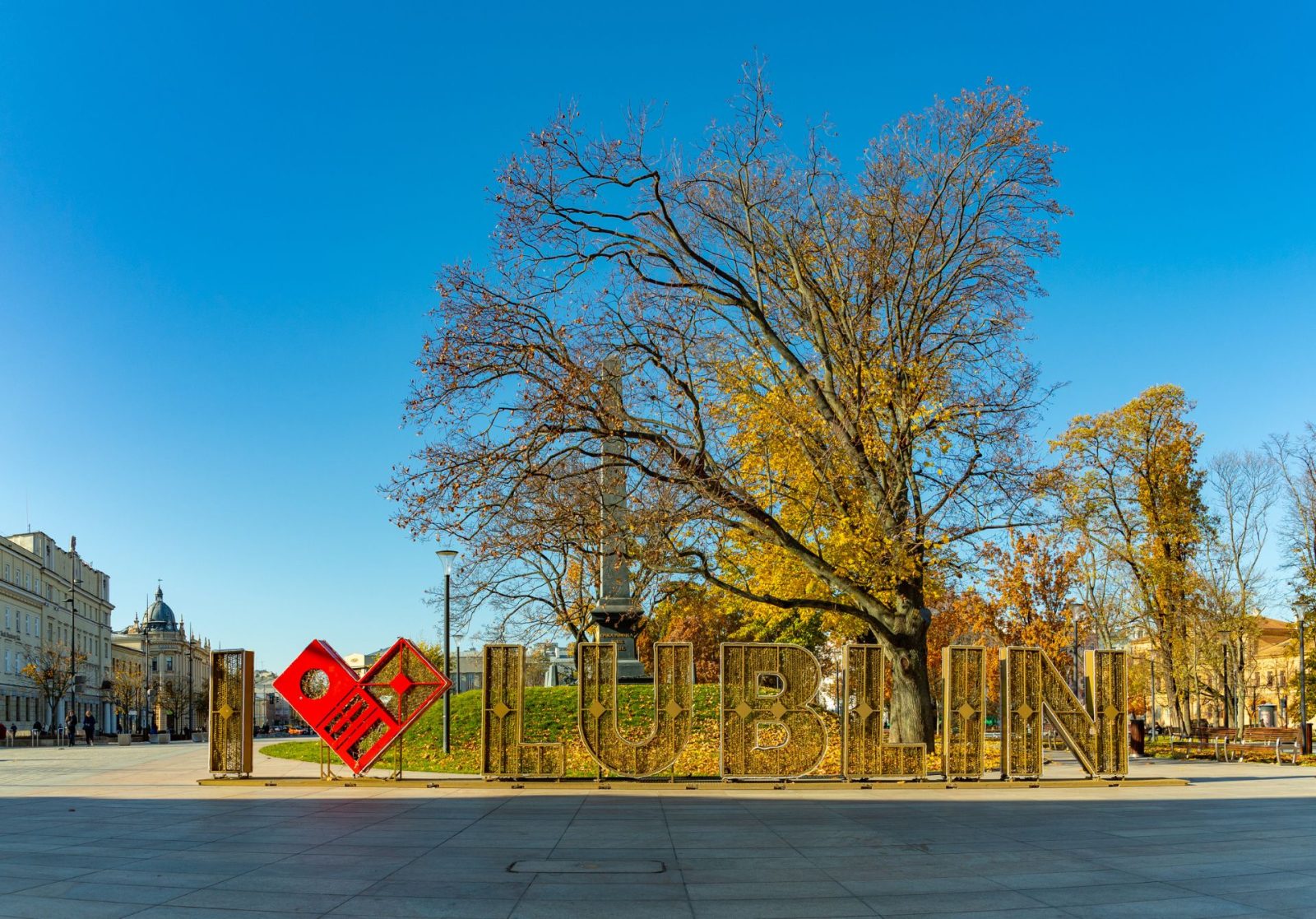
- The Lublin Union Monument (Obelisk): This obelisk-shaped monument honours the historic signing of the Polish-Lithuanian Union in 1569. It’s the emotional heart of the square — understated yet deeply significant.
- Monument to Marshal Józef Piłsudski: Unveiled in 2001, this statue honours one of Poland’s most revered national leaders — a man who effectively rebuilt independent Poland after over a century of partition.
- Monument to the Constitution of 3 May 1791: Another notable landmark on the square, commemorating Europe’s first modern codified national constitution — a remarkable achievement for its time and a proud moment in Polish democratic history.
- Monument to the Unknown Soldier: A deeply moving tribute to the nameless men and women who gave their lives for their country, this monument anchors the square’s role as a space for national remembrance and reflection.
Despite being rebuilt several times, the square has been a place underpinned with symbolic meaning for several hundred years — a powerful, representative space of tradition and history. That layered symbolism is palpable when you stand in the middle of it all.
The Surrounding Architecture: Grand Facades Worth a Good Look
The monuments are only half the visual feast. Look around you at the buildings that frame Litewski Square — they’re stunning, and each has its own dramatic backstory.
- The Former Lubomirski Palace: After acquisition by the State Treasury, this former magnate palace was turned into the seat of the guberniya authorities and the voivodeship office. Today it continues to serve an administrative role, but its aristocratic façade still catches the eye.
- The Central Post Office: This striking building gained its current look after a reconstruction in 1921. It now serves as an unexpected backdrop for the square’s legendary multimedia fountain shows — more on that in a moment.
- The Europa Hotel: This splendid edifice forms the eastern frontage of the square. It has witnessed history both grand and grim — including, reportedly, a notorious dinner between Russian and Nazi officers in September 1939 as they celebrated their joint invasion of Poland.
Architecture lovers will want to arrive at golden hour when the late afternoon sun catches the stonework just right. Bring a wide-angle lens if you have one — the scale of the square makes framing these buildings a genuine pleasure.
The Multimedia Fountain: An After-Dark Spectacle
If you’re visiting Lublin in the summer months, do yourself a favour and stick around after sunset. A new fountain was built as part of the revitalization project, including a complex of water devices with a five-metre-high dyke and Europe’s most modern five-function control system — combining water, light, sound, lasers, and an image projected on the façade of the post office building.
In summer, Litewski Square also features multimedia fountain shows, where short films on the city’s history and cultural sites are projected onto a water curtain. It’s simultaneously a history lesson and a spectacle — the kind of thing kids and adults both end up watching with their mouths slightly open.
Greenery, fountains, and numerous benches make Litewski Square a popular meeting place for Lublin residents, and the heart of the square is a modern multimedia fountain which sparkles with many colours after dark. Even on a night when no show is scheduled, the illuminated jets of water make for a gorgeous atmosphere.
The Revitalization: How the Square Got Its Modern Groove
The Litewski Square you’ll visit today didn’t happen by accident. In 2010, a comprehensive revitalization plan was announced with the aim of transforming the square into a predominantly pedestrian area, enhancing its appeal and accessibility.
During the works, the Orthodox Church’s foundations were secured and remnants of old routes and buildings were discovered. The spatial layout of the square was preserved, and the historical route leading in the direction of Wieniawa was reconstructed. Planners were careful to honour the past even while building for the future.
The revitalized Litewski Square reopened to the public in June 2017, offering a blend of historical charm and contemporary amenities. It’s a model of how urban heritage spaces can be refreshed without losing their soul — a lesson other European cities are still learning.
Practical Tips for Your Visit
Ready to go? Here’s what the savvy visitor should know before heading to Plac Litewski:
- Best time to visit: Summer evenings are magical thanks to the fountain shows, but spring and autumn bring beautiful light and smaller crowds. The square is enjoyable year-round.
- Getting there: Litewski Square sits in the newer part of Lublin’s historic centre and is easily walkable from the Old Town — roughly a 5–10 minute stroll from the Kraków Gate.
- Combine your visit: A guided walk from Litewski Square through the Old Town to the Castle takes approximately two hours and gives you a beautifully structured overview of the city’s most important historic sites.
- Nearby attractions: Don’t miss the Centre for the Meeting of Cultures at Teatralny Square, the Lublin Castle, and the Saxon Gardens — all within comfortable walking distance.
- Sit and soak it in: Benches are plentiful around the square. Grab a coffee from a nearby café, find a seat, and watch Lublin go about its day. Some of the best travel moments aren’t in a museum — they’re moments like this.
- Registered Heritage Site: The square is listed in the Register of Historical Monuments under the number A/588, having been entered into the register on 10 April 1972. You’re visiting somewhere officially recognized as irreplaceable.
The Bottom Line: Why Litewski Square Belongs on Your Lublin Itinerary
Litewski Square is far more than a pleasant patch of cobblestones in eastern Poland. It’s a place where five centuries of history converge — from the world-changing union of 1569, through tsarist occupation, wartime intrigue, communist rule, and finally a 21st-century renaissance as a beloved urban gathering space. Every monument, every building, every jet of the multimedia fountain carries a piece of that story.
For the curious traveller, it offers rich historical layering and powerful symbols of Polish national identity. For the casual visitor, it offers beauty, atmosphere, and a spot to relax that few European city squares can match. And for those who linger into the evening, the summer fountain shows transform it into something genuinely unforgettable.