Grodzka Gate–NN Theatre Centre
If you’re planning a trip to Poland and want an experience that goes far beyond castle tours and pierogis, Lublin has a gem that deserves a full day of your itinerary. The Grodzka Gate – NN Theatre Centre is one of those rare places that genuinely moves you — part museum, part cultural institution, part living memorial. Whether you’re a history enthusiast, a curious traveller, or someone who appreciates the power of storytelling, this place will leave a mark on you that no Instagram filter can replicate.
A Gate With a Story Older Than You’d Think
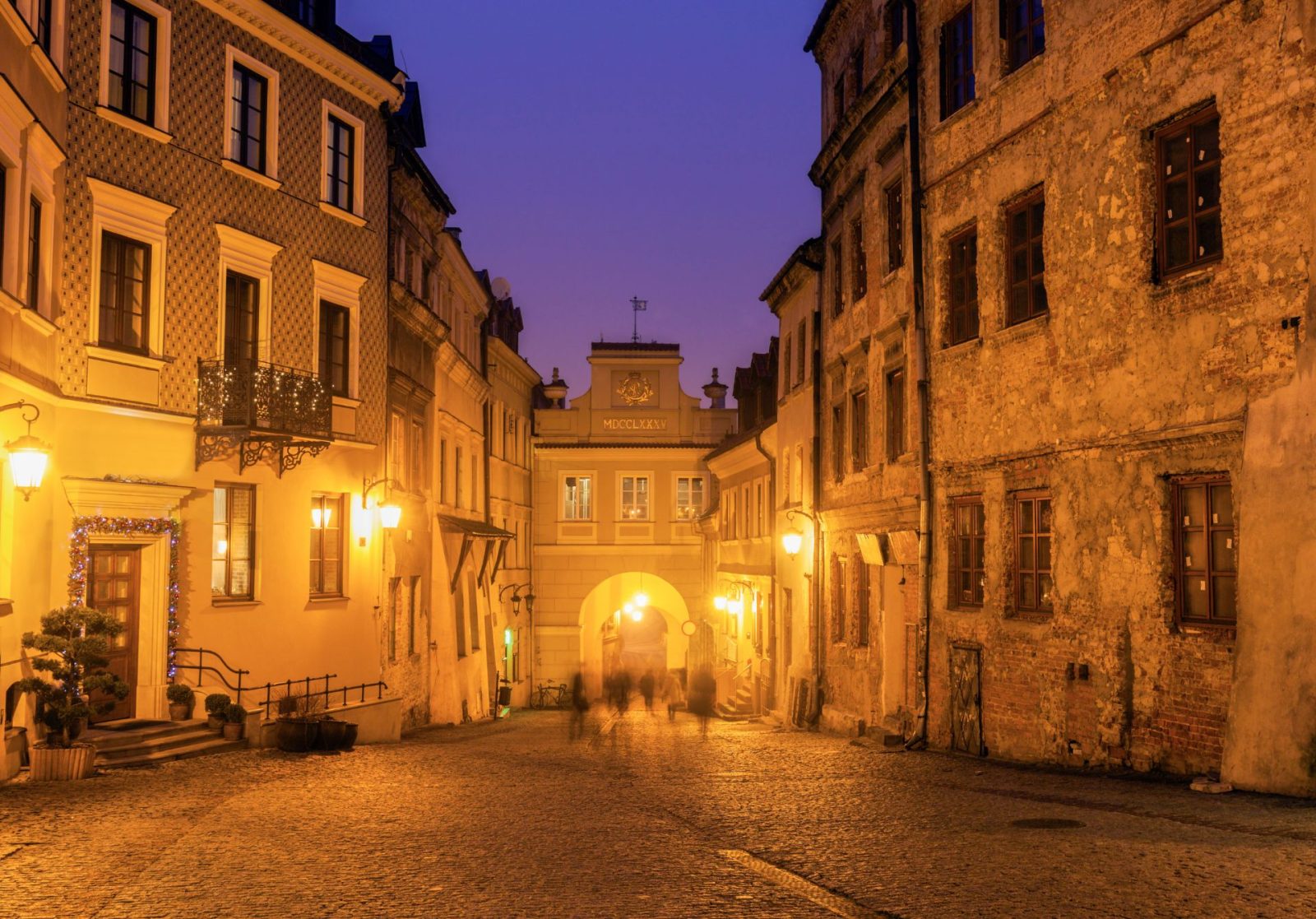
Let’s start at the very beginning. The Grodzka Gate itself — sometimes called the Jewish Gate — is not a modern installation or a recent concept. This stone archway was first built in 1342, following the permission of King Kazimierz the Great, as part of Lublin’s city fortifications. It originally stood about 12 metres high, with a pointed arch passageway and a guards’ room above.
Over the centuries, the gate underwent many changes — a drawbridge was added in the 1560s, the passageway was arched in the 1580s, and by 1785 it had been repurposed into a dwelling and commercial space. By the 19th century, it had become private property. After World War II it housed a Fine Arts High School, and later a Theatrical Studio. It wasn’t until 1992 that the building found its most meaningful purpose yet.
“The Gate used to be a passage from the Christian to the Jewish part of the city — a meeting place of various cultures, traditions and religions.” — Grodzka Gate – NN Theatre Centre
The Crossroads of Two Worlds
What makes the Grodzka Gate so historically significant is its role as a literal and symbolic boundary. For centuries, it stood at the dividing line between the Christian and Jewish quarters of Lublin — a threshold between two communities who lived side by side, traded with one another, and shared the same city streets.
By 1939, Lublin was home to nearly 120,000 residents, of whom approximately 43,000 were Jewish. The Jewish quarter was a vibrant, living world — full of houses, synagogues, schools, and markets. The Holocaust changed all of that forever. The Nazis systematically murdered the Jewish inhabitants of Lublin and destroyed the entire Jewish district. Majdanek, the German Nazi concentration camp located on the outskirts of the city, became one of the most chilling symbols of that annihilation.
Today, where those streets, synagogues, and homes once stood — there is a parking lot, roads, and concrete. The physical absence is overwhelming. And that is precisely why the Grodzka Gate–NN Theatre Centre exists: to reclaim that memory from the silence.
How the NN Theatre Centre Came to Be
In 1990, a group of theatre enthusiasts walked into the then-derelict Grodzka Gate building, looking to continue the tradition of Lublin’s vibrant alternative theatre scene. What they found — and what they uncovered — changed everything. The discovery of the gate’s layered, forgotten history transformed a theatre project into something far more profound.
By 1992, the NN Theatre had moved into the Grodzka Gate and adjacent tenement houses, beginning a massive effort of renovation and cultural revival. In 1998, the organisation was formally renamed the “Grodzka Gate – NN Theatre” Centre and became an official local government cultural institution. The “NN,” for those curious, comes from the Latin nomen nescio — meaning “I do not know the name” — a poignant tribute to all the unnamed, forgotten victims of history.
What You’ll Actually Experience When You Visit
The Centre currently operates across three key locations in Lublin, all connected by the shared mission of telling the city’s story. Here’s what’s waiting for you:
- The Grodzka Gate Exhibition (“Lublin. Memory of the Place”): The permanent exhibition inside the gate building is divided into three powerful parts — the story of the Jewish city before 1939, a commemoration of the Jews murdered during the Holocaust, and a tribute to the Righteous Among the Nations (those who risked their lives to save Jews). Highlights include rare photographs, recorded oral testimonies, archival documents, and a stunning multimedia model of Lublin with replicas of over 840 buildings from the 1930s — townhouses, shops, and synagogues all recreated in meticulous detail.
- The Lublin Underground Trail: Running 280 metres beneath the 16th and 17th-century houses of the Old Town, this underground route is a favourite with visitors of all ages. Starting at the Royal Tribunal, it passes through fourteen exposition halls showcasing the history of Lublin from the 8th century onwards. The highlight? A breathtaking multimedia recreation of the great fire of Lublin in 1719.
- The House of Words (Dom Słów): Located on Żmigród Street, this unique museum opened in its current form in 2014 and focuses on the value of words — both printed and spoken — in social life and culture. It’s a fascinating and slightly unexpected gem that appeals to booklovers, language enthusiasts, and anyone who has ever thought deeply about communication.
- The Cellar Under Fortuna: Another atmospheric space managed by the Centre, adding yet another layer to the rich tapestry of history available in a single visit.
The Story of Henio — History Made Personal
One of the most affecting elements of the Centre’s work is its dedication to individual stories, not just statistics. Among the most poignant is the story of Henio Żytomirski, a Jewish boy born and raised in Lublin. At just nine years old, he was murdered in a gas chamber at the Majdanek concentration camp. The Centre has devoted a dedicated part of its exhibition to Henio, gathering letters, photographs, and family records to reconstruct his short life in vivid, heartbreaking detail.
The Centre even created a Facebook profile for Henio as part of an outreach project — sharing photographs and posts on his behalf — which attracted followers from around the world who translated the content into their own languages. It was a deeply creative way of saying: this was a real person, not a number.
An Archive That Rivals Any in Europe
Beyond its exhibitions, the Grodzka Gate–NN Theatre Centre has built one of the most remarkable oral history archives in Poland. Following rigorous oral history guidelines, the Centre has collected memories from almost 2,000 people and recorded more than 3,000 hours of audio and video material. Topics span everyday life, education, intercultural relations, World War II, the Holocaust, Polish-Jewish relations during the war, and resistance movements under communist rule.
All of this material is available online, fully catalogued according to the Dublin Core Metadata Initiative — making it accessible to researchers, students, and the general public worldwide. It’s the largest collection of its kind in Poland, and a resource of truly international significance.
Art, Theatre, and the “Mysteries of Memory”
This isn’t just a museum — it’s a living cultural institution. The NN Theatre continues to create original artistic work rooted in the memory of place. Their Mysteries of Memory performances use the actual city as their stage — no sets, no actors in the conventional sense — just light, sound, and the city’s own topography. In 2004, one of the last surviving pre-war street lamps of Lublin was lit as a symbolic eternal flame near the site of the destroyed Jewish Quarter. It has never been switched off since — burning day and night as a permanent act of remembrance.
Practical Tips for Visitors
Planning to visit? Here’s what you need to know to make the most of your time:
- Opening Hours: Monday to Friday, 9 a.m. – 5 p.m.; Saturday 10 a.m. – 5 p.m. (May through September).
- Guided Tours: English-language guided tours of the main exhibition are available at fixed times, Monday to Friday — highly recommended for first-time visitors.
- Tickets: Available online on the Centre’s website at teatrnn.pl — booking in advance is advisable, especially during peak tourist season.
- Location: The main Grodzka Gate building is at ul. Grodzka 21, 20-112 Lublin, right in the heart of the Old Town. All three sites are within easy walking distance of each other.
- Allow enough time: Budget at least 3–4 hours if you want to visit the gate exhibition, the Underground Trail, and the House of Words. Each space deserves unhurried attention.
- Combine with Lublin’s Old Town: The Centre is perfectly situated for a wider Old Town walk — the Royal Castle, the Cathedral, and Krakowskie Przedmieście are all nearby.
Why This Place Belongs on Every Itinerary
The Grodzka Gate – NN Theatre Centre is one of those rare travel experiences that stays with you long after you’ve left. It’s not just a museum — it’s a meditation on memory, identity, and what it means to bear witness to history. From its 14th-century stone archway and the silence of the vanished Jewish Quarter, to its world-class oral history archive, its underground medieval trail, and its deeply human storytelling, this Centre does something remarkable: it refuses to let the forgotten stay forgotten.
Whether you’re in Lublin for a weekend city break or building a deeper journey through Eastern European history, make the Grodzka Gate your priority. Go early, take the English guided tour, linger in the exhibition halls, and walk out through the gate itself — knowing that for centuries, two worlds met right where you’re standing. Some places simply deserve to be experienced in person. This is one of them.