Jewish Cemetery
If you’re planning a trip to Poland and you’ve already ticked off Warsaw and Kraków, let us let you in on a secret: Lublin is where the real depth lives. And at the very heart of Lublin’s extraordinary Jewish heritage sits something you won’t find anywhere else in the country — the oldest Jewish cemetery still standing on Polish soil. Whether you’re a history buff, a heritage traveller, or simply someone who loves discovering places that carry genuine emotional weight, this is a destination that will stay with you long after you’ve left.
Why Lublin? The “Jerusalem of the Polish Kingdom”
Lublin wasn’t always just another provincial city in eastern Poland. For centuries, it was one of the most important Jewish cultural and intellectual hubs in all of Europe. The city earned the extraordinary nickname “Jerusalem of the Polish Kingdom” — and even “The Jewish Oxford” — thanks to its world-renowned yeshiva, its pioneering Hebrew printing press, and its role as the home of the Council of the Four Lands (Waad Arba Aracot), the supreme governing body for Jews across Poland and Lithuania, which convened here from 1580 onward.
By the 19th century, Jews made up roughly 50% of Lublin’s population. The community had its own schools, synagogues, markets, printing houses, and of course — cemeteries. Today, visiting those cemeteries is one of the most powerful ways to connect with that vanished world.
The Old Jewish Cemetery: Poland’s Oldest Surviving Jewish Burial Ground
Perched on a high loessial hill at the junction of Kalinowszczyzna and Sienna Streets, the Old Jewish Cemetery (Stary Cmentarz Żydowski) is nothing short of remarkable. Founded around 1541, it is the oldest Jewish cemetery still in existence in Poland. The site is enclosed by an impressive 17th-century brick wall and overlooks the city’s Old Town — giving visitors both a sense of history and a stunning viewpoint.
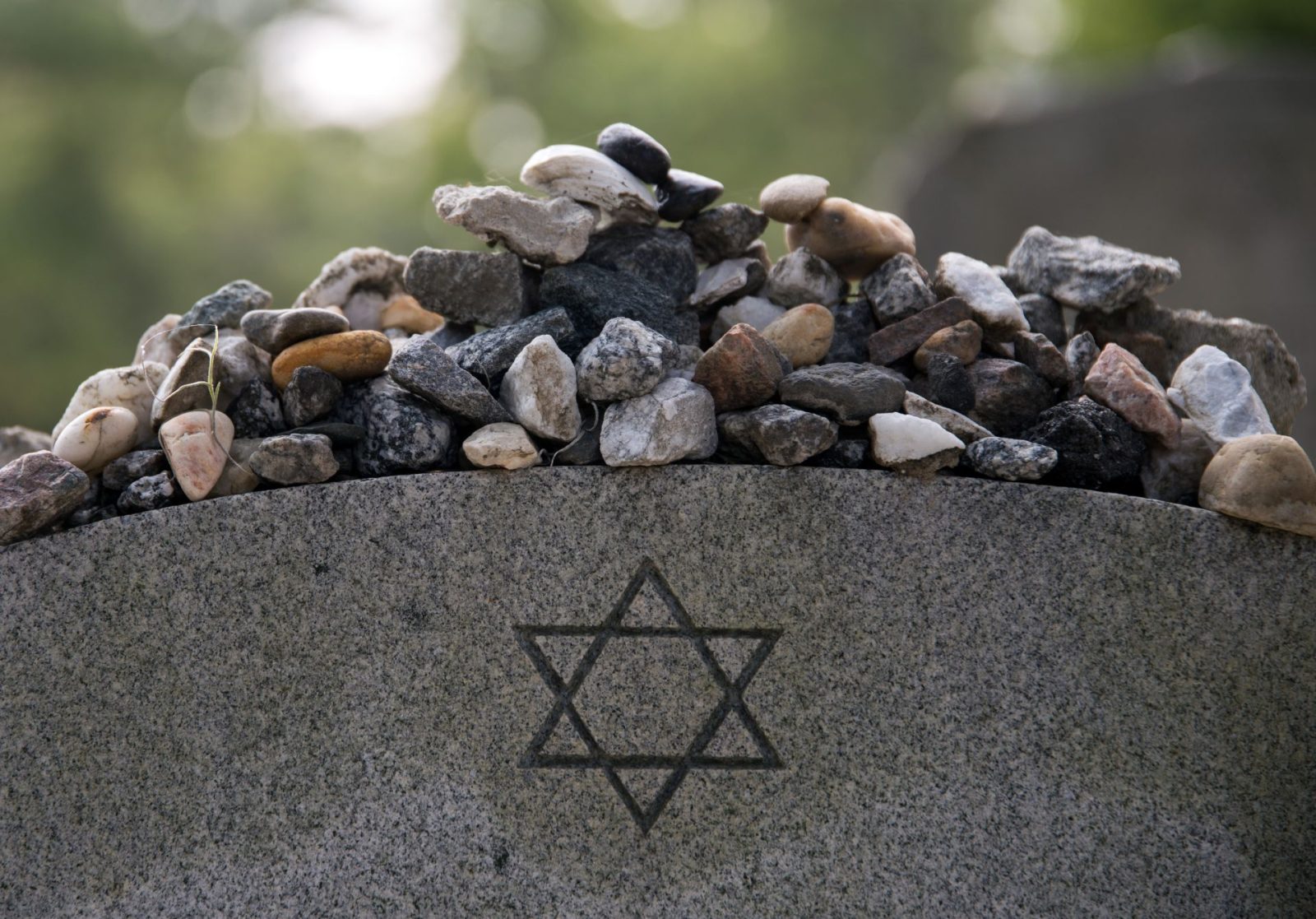
What makes the cemetery especially moving is what has survived. Out of what was once an estimated 3,000 matzevot (tombstones) before World War II, around 200 remain today in varying states of preservation. Each one is a tiny window into a life lived centuries ago:
- 12 matzevot from the 16th century, among the oldest Jewish gravestones in all of Central Europe
- Over 60 matzevot from the 17th century, many adorned with intricate stonemasonry
- Over 80 matzevot from the 18th century, reflecting changing artistic and cultural trends
- Over 70 matzevot from the 19th century, spanning the final decades of burials on this hill
The oldest tombstone still standing in its original location anywhere in Poland marks the grave of Yaakov Kopelman ben Yehuda ha-Levi, who died in 1541. Just standing beside it is a quietly profound experience.
The Remarkable Figures Buried Here
This isn’t just a collection of old stones — it’s a who’s who of Jewish intellectual and spiritual history. Walking through the cemetery, you’ll come across the final resting places of some genuinely legendary figures:
- Shalom Szachna ben Yosef (died 1558) — founder of the famous Lublin Yeshiva in 1515, one of the most influential Talmudic academies in Europe
- Shlomo ben Yechiel Luria, “Maharshal” (died 1573) — a towering scholar whose Talmudic commentaries are still studied today
- Yaakov Yitzhak Horowitz, “The Seer of Lublin” (died 1815) — a beloved Hasidic master whose tomb (an ohel, or lattice-covered gravestone) draws Jewish pilgrims from Israel, the United States, and across the world to this day
The Seer of Lublin, in particular, is a significant draw for religious tourism. His grave is considered a holy site in Hasidic tradition, and the anniversary of his passing (yahrzeit) draws visitors in remarkable numbers each year.
The New Jewish Cemetery: Healing and Remembrance
A short distance away on Walecznych Street stands the New Jewish Cemetery, established in 1829. Before the war, it served as the burial ground for around 52,000 Jews. During the Nazi occupation, it was devastated — matzevot were torn out and used to harden the so-called “Black Road” leading to the nearby Majdanek concentration camp. Very little physically survived the war.
In the late 1980s, thanks to the Sara and Manfred Frenkel Foundation, restoration began. In 1989 the site was entered into Poland’s register of monuments, and today the restored cemetery is enclosed by a wall of symbolic, intentionally damaged matzevot — a striking visual tribute to what was lost. At the entrance, you’ll find:
- A memorial mausoleum with a small active synagogue inside
- The Memorial Chamber of the Lublin Jews, preserving the memory of the community
- An obelisk commemorating the Jewish victims of the Holocaust
- Military graves of Jewish soldiers who served in the Polish Army between 1944–1945
- An empty ohel marking the former grave of Rabbi Maier Szapiro, founder of the Chachmei Lublin Yeshiva
The New Cemetery still serves as an active burial site for Lublin’s small but resilient contemporary Jewish community, and prayers are held in its synagogue during visits by Jewish groups from Israel and the United States.
Beyond the Cemeteries: Lublin’s Broader Jewish Heritage Trail
No trip to Lublin’s Jewish heritage sites would be complete without exploring the wider landscape of memory that the city preserves. The official Heritage Trail of the Lublin Jews, mapped out by the city, connects a series of meaningful stops:
- The Chachmei Lublin Yeshiva (now Hotel Ilan) on Lubartowska Street — once the world’s largest Talmudic university, opened in 1930 and funded by Jewish communities worldwide
- Castle Square and Szeroka Street — the historic heart of the old Jewish district, with commemorative plaques marking where a thriving community once lived
- The site of the former Jewish Orphanage at ul. Grodzka 11, where over 100 children were rounded up and murdered by the Nazis on 24 March 1942
- The Majdanek State Museum, just a few kilometres from the city centre — one of the best-preserved Nazi death camps in the world, a sobering and essential visit
Practical Tips for Visiting
- Dress respectfully — as active religious and memorial sites, modest dress is appreciated. Men should have a head covering (kippah) when entering the ohel areas.
- Book a guided tour — the Old Cemetery is open to organised groups with an approved guide. Solo visitors should arrange access in advance through the city’s Jewish Community or by collecting the key from Hotel Ilan.
- Visit in the late afternoon — the golden light on the matzevot and the view over the Old Town from the hilltop cemetery is stunning at dusk.
- Combine with Hotel Ilan — staying at this beautifully restored four-star hotel (featuring kosher cuisine, a spa, and 44 rooms) places you right in the heart of the heritage trail.
- Allow a full day — between the two cemeteries, the Yeshiva, Castle Square, and Majdanek, a meaningful visit takes the better part of a day.
Final Thoughts: A City That Remembers
Lublin’s Jewish cemeteries are not simply tourist attractions — they are places of memory, scholarship, pilgrimage, and quiet grief. The Old Jewish Cemetery, with its 16th-century matzevot and the grave of the Seer of Lublin, stands as the oldest surviving Jewish burial ground in Poland. The New Jewish Cemetery, painstakingly restored after Nazi destruction, offers a deeply moving encounter with Holocaust history and the resilience of a community that refuses to be forgotten.
Together, these sites — alongside the Yeshiva, the heritage trail, and the nearby Majdanek memorial — make Lublin one of the most important Jewish heritage destinations in all of Europe. For travellers who want to go beyond the surface and touch something real, something lasting, Lublin delivers in ways few cities can.