
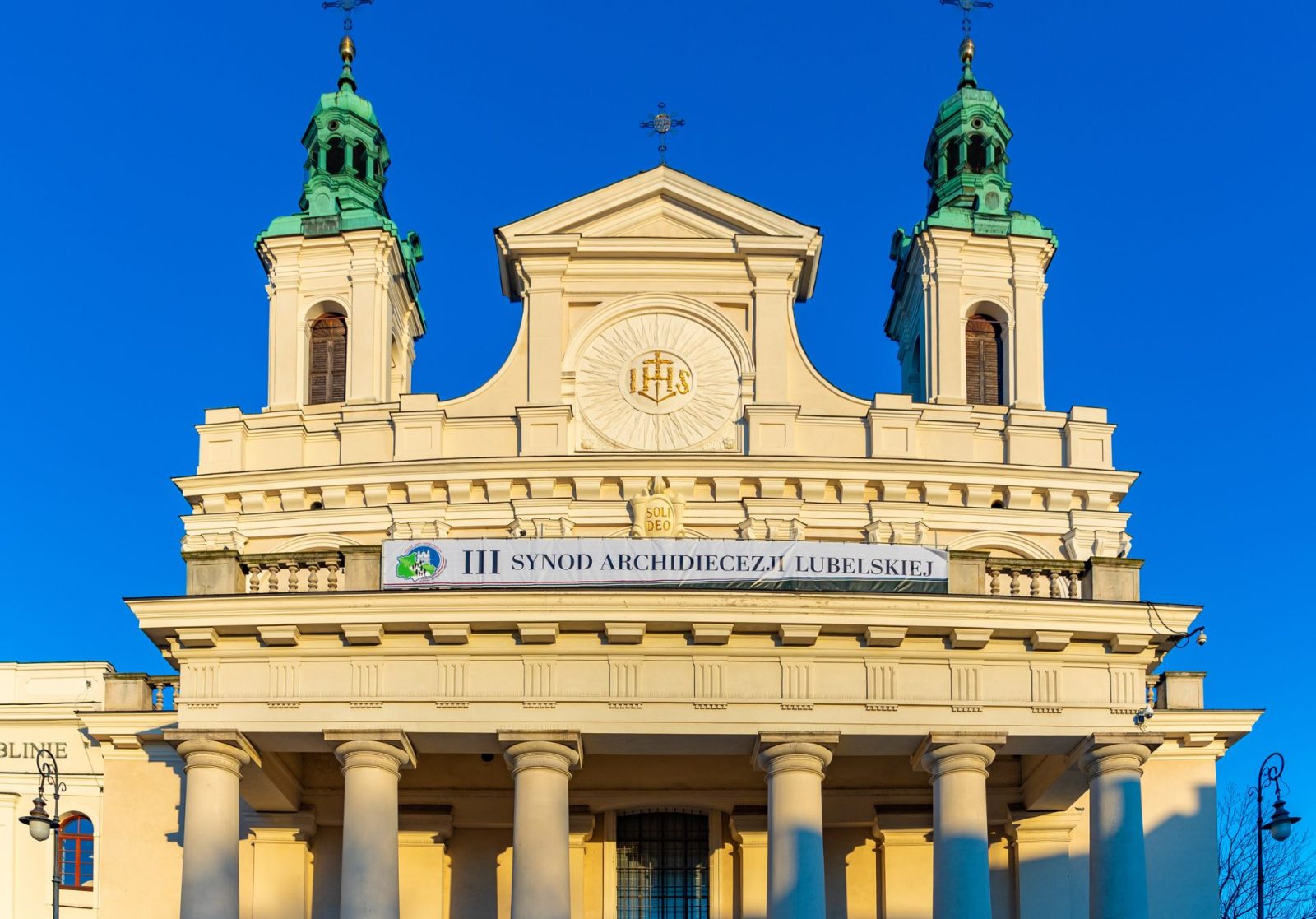
Lublin Cathedral
If you’re planning a trip to Poland and your itinerary only includes Warsaw and Kraków, you’re genuinely missing out. About 170 kilometres south-east of Warsaw lies the remarkable city of Lublin — and right at its heart stands one of the country’s most fascinating and historically layered religious monuments: the Lublin Archcathedral of St. John the Baptist and St. John the Evangelist. Whether you’re a history buff, an architecture admirer, or simply someone who enjoys stumbling into a breathtaking space, this cathedral is the kind of place that stays with you long after you’ve left Poland.
This guide gives you everything you need — the history, the must-see features, the quirky surprises, and the practical tips — to make your visit truly memorable.
A Church With More Lives Than a Cat: The History of Lublin Cathedral
The story of Lublin Cathedral begins in the late 16th century, and it’s anything but a straight line. Construction started in 1586 and was completed in 1604, commissioned by the Jesuits who had recently arrived in Lublin. The original architects were two Italians — Giovanni Maria Bernardoni and Giuseppe Briccio — both members of the Society of Jesus with deep experience in sacred construction across Europe. Their design was directly inspired by Il Gesù, the famous mother church of the Jesuit Order in Rome, making Lublin’s cathedral one of the earliest Baroque buildings erected outside Italy.
The church was consecrated in 1604 by the Bishop of Kraków, Bernard Maciejowski, and dedicated jointly to St. John the Baptist and St. John the Evangelist — a dual dedication that remains in place to this day.
But the cathedral’s journey through history was far from smooth. Here’s a quick timeline of the dramatic chapters it has lived through:
- 1604: Church consecrated as a Jesuit place of worship; a college complex is built around Cathedral Square.
- 1752: A devastating fire damages the structure, prompting a major rebuilding effort. It is during this restoration that master painter Józef Meyer creates the extraordinary illusionist polychromes that still dazzle visitors today.
- 1773: Pope Clement XIV dissolves the Jesuit Order, and the church briefly passes to the Trinitarian Order.
- Late 18th century: Austrian partitioners, in one of history’s more undignified uses of a sacred building, convert it into a grain warehouse.
- 1805: The Diocese of Lublin is established, and the building is renovated and elevated to a cathedral. Italian architect Antonio Corazzi oversees the works, adding a classicist six-column portico and heightening the Trinitarian Tower.
- September 1939: German air raids during WWII cause significant damage to the cathedral.
- Post-WWII: The cathedral is painstakingly rebuilt to the form visitors see today.
All of this means that when you walk through the cathedral’s doors, you’re not just entering a building — you’re stepping into over four centuries of turbulent European history.
Architecture That Will Stop You in Your Tracks
From the outside, the cathedral presents a distinguished Baroque façade softened by the classicist portico added in the 19th century. The white exterior is clean and commanding, sitting impressively beside Lublin’s Old Town. But it is the interior where things get truly spectacular.
The moment you push through the curtain into the main nave, you are hit by an explosion of colour, depth, and grandeur. The walls and ceilings are covered in the famous illusionist polychromes created by Józef Meyer in the mid-18th century — trompe-l’œil masterpieces that use bold perspective and foreshortening to make flat painted surfaces look three-dimensional. Columns seem to rise impossibly high, arches appear to recede into the distance, and figures in the ceiling appear to look down at you with genuine depth. It’s the 18th-century equivalent of a special-effects blockbuster, and it’s genuinely astonishing.
Key architectural highlights inside the cathedral include:
- The illusionist polychromes: Meyer’s fresco cycles cover the nave, presbytery, and chapels, depicting Biblical scenes, landscapes, and architectural vistas with breathtaking skill. The style sits on the borderline between late Baroque and Rococo.
- The 17th-century altar: Crafted from black Lebanese pear wood (now in its original ebony colour), the altar is adorned with golden sculptures of saints and is considered one of the finest pieces of Baroque religious furniture in Poland.
- The grand organ: The current instrument is a massive 50-register organ with approximately 4,000 pipes, built in the 1930s. It is the third consecutive pipe organ to serve this cathedral, and the sound it produces is nothing short of extraordinary.
- The Chapel of the Holy Sacrament: This chapel features a conscious Mannerist design programme enriched with Italian elements, complemented by frescoes depicting scenes from the life of St. Stanisław Kostka. It is also home to the Tribunal Cross, which once hung in the main hall of the Crown Tribunal — one of the most important legal bodies in old Poland.
- The tombstone of Marcin Leśniowolski: An important historical artefact from the late 1620s preserved inside the cathedral.
“Outside it is clean and white but still impressive next to the old town. As you walk in the church you can feel the history with all the old wooden doors and surrounds… It is lavishly decorated with pink marble and lots of colour everywhere.” — Visitor review, TripAdvisor
The Cathedral’s Most Surprising Secrets
Beyond the obvious visual spectacle, Lublin Cathedral has a few genuinely unusual features that tend to delight visitors who stumble upon them — so we’re giving you the inside track.
The Acoustic Sacristy: A Whisper Across the Room
This is one of the most peculiar and delightful curiosities in any church in Poland. The Acoustic Sacristy (also called the Acoustic Vestry) is a room where, due to its unique elliptical shape and vaulted ceiling, two people standing in opposite corners can hear each other’s whispers with crystal clarity — even from across the room. Local guides love demonstrating this, and visitors are routinely charmed and baffled. It’s a brilliant piece of accidental (or perhaps intentional) acoustical architecture from the Baroque era, and it’s the kind of unexpected experience that makes travel worthwhile.
The Weeping Madonna
The cathedral holds a deeply venerated image of Our Lady of Częstochowa, and this particular image carries a remarkable story. On 3 July 1949, gathered worshippers reportedly witnessed tears streaming down the face of the Madonna in the painting. The event caused an immediate sensation and has contributed to the image’s status as a beloved object of pilgrimage and reverence to this day. Whether you’re religiously inclined or not, the story adds a layer of human and emotional history to the space that’s genuinely moving.
Relics of St. John Paul II
The cathedral also houses relics of Pope St. John Paul II, the beloved Polish pope who remains one of the most significant figures in both Polish religious and national identity. For many Polish visitors, this is one of the most emotionally meaningful stops in the entire cathedral.
The Crypts
Beneath the cathedral lie the crypts where the Bishops of Lublin have been interred over the centuries. Open to visitors, the crypts display episcopal garments, gravestone portraits, and objects buried alongside the deceased. It’s a sobering, fascinating, and surprisingly accessible slice of ecclesiastical history.
Don’t Leave Without Visiting the Trinitarian Tower
Standing directly beside the cathedral is the striking Trinitarian Tower — and if you skip it, you’ll be kicking yourself later. Originally built as a gate leading to the Jesuit College buildings, the tower takes its current name from the Trinitarian Order that took over the complex at the turn of the 18th and 19th centuries. The neo-Gothic tower was designed by Antonio Corazzi and rises approximately 60 metres high, featuring a quadrilateral body topped with an octagonal superstructure and a conical roof.
Reasons to climb the Trinitarian Tower:
- At 40 metres, there is a viewing platform offering sweeping panoramic views over Lublin’s Old Town and beyond — one of the best vantage points in the city.
- The tower houses the Lublin Archdiocese Museum, which contains a curated collection of religious sculptures, paintings, and historical artefacts connected to the cathedral and the wider diocese.
- The tower’s base incorporates a section of medieval defensive wall, meaning you’re literally standing on top of the city’s ancient fortifications.
Practical Tips for Your Visit
Lublin Cathedral is remarkably visitor-friendly, but a few practical notes will help you get the most out of the experience:
- Opening hours: The cathedral is open to visitors every day outside of scheduled services. Check locally for current service times, as access to certain areas may be limited during Mass.
- Dress respectfully: As with all active places of worship, modest attire is appreciated — covered shoulders and knees are the standard expectation.
- Guided tours: Guided tours of the cathedral and crypts are available and highly recommended — a knowledgeable guide will bring the polychromes and the cathedral’s turbulent history to life in ways a solo wander simply won’t match.
- Getting there: The cathedral sits on Cathedral Square (Plac Katedralny) in Lublin’s Old Town — easily walkable from the city centre and well-served by public transport.
- Sacred music concerts: The cathedral regularly hosts concerts of sacred music, particularly making use of its magnificent pipe organ. Check the local events calendar — attending a concert here is an unforgettable experience.
- Photography: Photography is generally permitted in the main nave outside of services, but always be respectful of worshippers and follow any posted guidelines.
- Combined visit: Budget at least 90 minutes to two hours for the cathedral and Trinitarian Tower together. Combine with a walk through Lublin’s charming Old Town for a full half-day itinerary.
Lublin Cathedral in Context: Why the Whole City Deserves Your Time
It would be a shame to visit the cathedral and not take in the rest of what Lublin offers. The city was first documented in 1144 and has been a crossroads of Eastern and Western European cultures for centuries. In 1569, it hosted the Union of Lublin — the landmark treaty that united the Kingdom of Poland and the Grand Duchy of Lithuania into one of the largest political unions in European history at the time.
Today, Lublin is Poland’s ninth-largest city and home to several major universities, giving it a youthful, cosmopolitan energy that sits comfortably alongside its medieval and Baroque heritage. Within easy walking distance of the cathedral you’ll find:
- Lublin Castle — a neo-Gothic fortress with museum exhibitions overlooking the city.
- The Old Town — a labyrinth of cobblestone streets, colourful Renaissance and Baroque facades, and excellent cafés.
- The Grodzka Gate — the historic boundary between the Christian and Jewish quarters of old Lublin, now a cultural centre dedicated to preserving the memory of the city’s Jewish heritage.
- Krakowskie Przedmieście Street — Lublin’s main promenade, lined with traditional cafés and restaurants perfect for a post-cathedral lunch or coffee.
The Bottom Line: Why You Simply Must Visit Lublin Cathedral
Lublin Cathedral is, without question, one of the most remarkable and underappreciated religious monuments in all of Central Europe. From its origins as one of the earliest Baroque churches built outside Italy, through its dramatic reinventions as a Jesuit college church, a grain warehouse, and finally a cathedral, this building carries more history in its walls than most cities carry in their entire old towns.
The interior alone — with Józef Meyer’s staggering illusionist polychromes, the golden Baroque altar, and the vast pipe organ — is worth the trip to Lublin by itself. Add in the whispering Acoustic Sacristy, the venerated Weeping Madonna, the accessible crypts, and the panoramic Trinitarian Tower, and you have a site that rewards curious, engaged visitors on every level.